Can regional Poland redefine premium incentive travel through sustainability, authenticity and local partnerships? In SITE Poland`s Green Talks #22, WOWland founder Majka Szura shares how ESG principles, slow travel design and culturally rooted storytelling are transforming Poland’s regions into high-value, responsible destinations for the international MICE and incentive market.
Beata Koziarska: During the Destination Poland Green Academy workshop in Kielce, you presented a regional best practice case study. I am truly impressed by the WOWland project. What is the story behind its creation?
Majka Szura: WOWland was born from a very simple yet bold idea: if we are fascinated by the world, why not be equally fascinated by our own region, presented in a professional and emotionally engaging way? Paradoxically, and against all odds, the project was launched in early May 2020, at the height of the COVID-19 pandemic. Borders were closed, and long-haul travel was impossible. Instead of waiting passively for “better times”, we decided to explore Poland. What we discovered was an impressive potential, fully comparable in quality to similar premium concepts in Western Europe.
The project was created to position regional Poland as a premium, authentic and responsible destination. From the outset, sustainability has been our guiding principle: collaboration with local creators, family-owned vineyards, support for regional manufacturers such as striped flint jewellery and the famous Szydłów plum, and the preservation of disappearing crafts and professions. Each programme is designed so that expenditure remains within the region, and the experience becomes a genuine human encounter, not merely an “attraction”, but a relationship.
WOWland is both a response to fatigue with mass tourism and proof that Poland can be modern, ecological and surprising.
What constitutes the WOW effect in programmes delivered in Poland?
The WOW effect lies in the quality of the experience. It may be a dinner in a vineyard at sunset, zero-waste workshops, a torch-lit castle tour, or a conversation with an artist in their studio.
We combine slow travel with experience design: aesthetics, meticulous attention to detail, biodegradable event materials, in-house film productions and culturally grounded storytelling. These programmes are crafted with the dramaturgy, rhythm and wellbeing components of international journeys, yet firmly rooted in the local context.
WOW is the moment when a participant says: “I did not realise Poland could look like this.”
You emphasise that women are the primary audience for this programme. Why?
Women more frequently plan travel and seek authenticity, emotional depth and purpose in their journeys. Global data indicates that approximately 70 per cent of solo travellers are women. We also observe a greater sensitivity among female travellers to issues of ecology, ethics, aesthetics and relationships.
Programmes such as Lejdis Trip respond directly to these expectations: safety, comfort, wellbeing, workshops, aromatherapy, movement, culture and contemporary interpretations of regional cuisine.
For over a decade, I have organised Lejdis Trip programmes worldwide. On several occasions, my clients have participated in editions held in the Świętokrzyskie Region. Despite having visited many remarkable destinations globally, they return from these local WOWland journeys genuinely delighted.
These are experiences that not only satisfy curiosity but also foster a sense of community.
Is it difficult to build programmes based on sustainability principles in Poland?
It is both a challenge and a significant opportunity. Not all suppliers are yet fully prepared to meet ESG or zero-waste standards; however, awareness is increasing rapidly. We often act as initiators of change by proposing the elimination of plastics, supporting ecological workshops, introducing educational applications and selecting family-owned properties over chain hotels.
Sustainable development requires dialogue and patience, yet an increasing number of partners recognise that it is not a passing trend but a long-term direction. Through our extensive regional travels, we have developed curated lists of eco-initiatives, workshops and responsible attractions which we integrate into our programmes.
What makes regional tourism in Poland unique?
Regional Poland offers a multicultural heritage that is not immediately obvious. The country can be “tasted” through Jewish, Tatar and Lemko traditions, alongside traces of historic crafts. Regional Poland connects nature, history and intimacy. It represents the luxury of silence.
Our focus includes:
- regional cuisine delivered in a farm-to-table format
- vineyards and the new wave of Polish winemaking
- active tourism, such as Green Velo cycling routes and electric bikes
- storytelling based on ethnographic interviews
- proprietary photo and video content created entirely by our team.
The uniqueness lies in the fact that each experience is personal and unrepeatable.
Do you observe increasing interest from international clients?
Yes, particularly within the premium and incentive travel segments. International guests are seeking a “real Poland experience”: craft workshops, local gastronomy and meetings with creators rather than traditional city breaks in Kraków or Warsaw. The authenticity and intimacy of regional destinations are perceived as something exotic, yet delivered within a European and safe framework.
Can sustainable principles be fully embedded in programmes delivered in Poland?
Absolutely, and we implement them consistently. Zero-waste cosmetic workshops, biodegradable event materials, support for local producers, short supply chains, low-emission activities such as cycling and kayaking, and educational communication through applications and newsletters. Sustainability is embedded in the programme architecture from concept to execution, based on years of experience and trusted partnerships.
What challenges do you identify?
- Environmental challenges include transport and the dispersed nature of regional attractions.
- Social challenges involve building awareness among all partners that eco-responsibility should be a shared standard.
- Cultural challenges relate to creating a coherent and contemporary narrative for regions built around #SLOW, wellbeing and premium positioning that resonates with new audiences.
We also require more boutique properties, concept-driven farm-to-table restaurants and premium products dedicated to women.
I have developed an “INSTA Map” of the Świętokrzyskie Region. Ideally, regional promotion should actively involve Instagram creators. Countries that perform exceptionally well on Instagram, such as Korea and Bali in Indonesia, demonstrate how visual storytelling attracts younger audiences. Poland has the same potential; it requires strong cooperation between tourism promotion organisations and younger generations.
Does promoting such programmes contribute to regional development?
Undoubtedly. Each programme provides tangible support to the local economy from vineyards and artisans to family-run hotels. Crucially, revenue flows directly to family-owned manufacturers and enterprises, which become the region’s most authentic ambassadors.
We create a snowball effect: social media visibility, multilingual communication, presence at international trade fairs and industry recognition, including nominations such as the MP Power Awards, contribute to building the brand of a region as a conscious, quality-driven destination.
How should stakeholders within a region collaborate?
Through partnership and a shared vision. A coherent regional brand, unified narrative and consistent ecological standards are essential.
While there are many outstanding grassroots initiatives, creative entrepreneurs and revitalised properties, what is still lacking is an integrated premium strategy and stronger transport logistics.
I am convinced that if authenticity, quality and sustainability are combined into one compelling narrative, regional Poland can become one of the most intriguing slow travel destinations in Europe.
Thank you very much for this inspiring conversation.
The WOWland project demonstrates how local potential can be transformed into authentic premium experiences while supporting domestic artisans and preserving disappearing crafts. “Poland is the WOWland” is not merely a trend, but a responsibility towards regions that enables Poland to be rediscovered in a modern, ecological and culturally respectful way.
About speakers
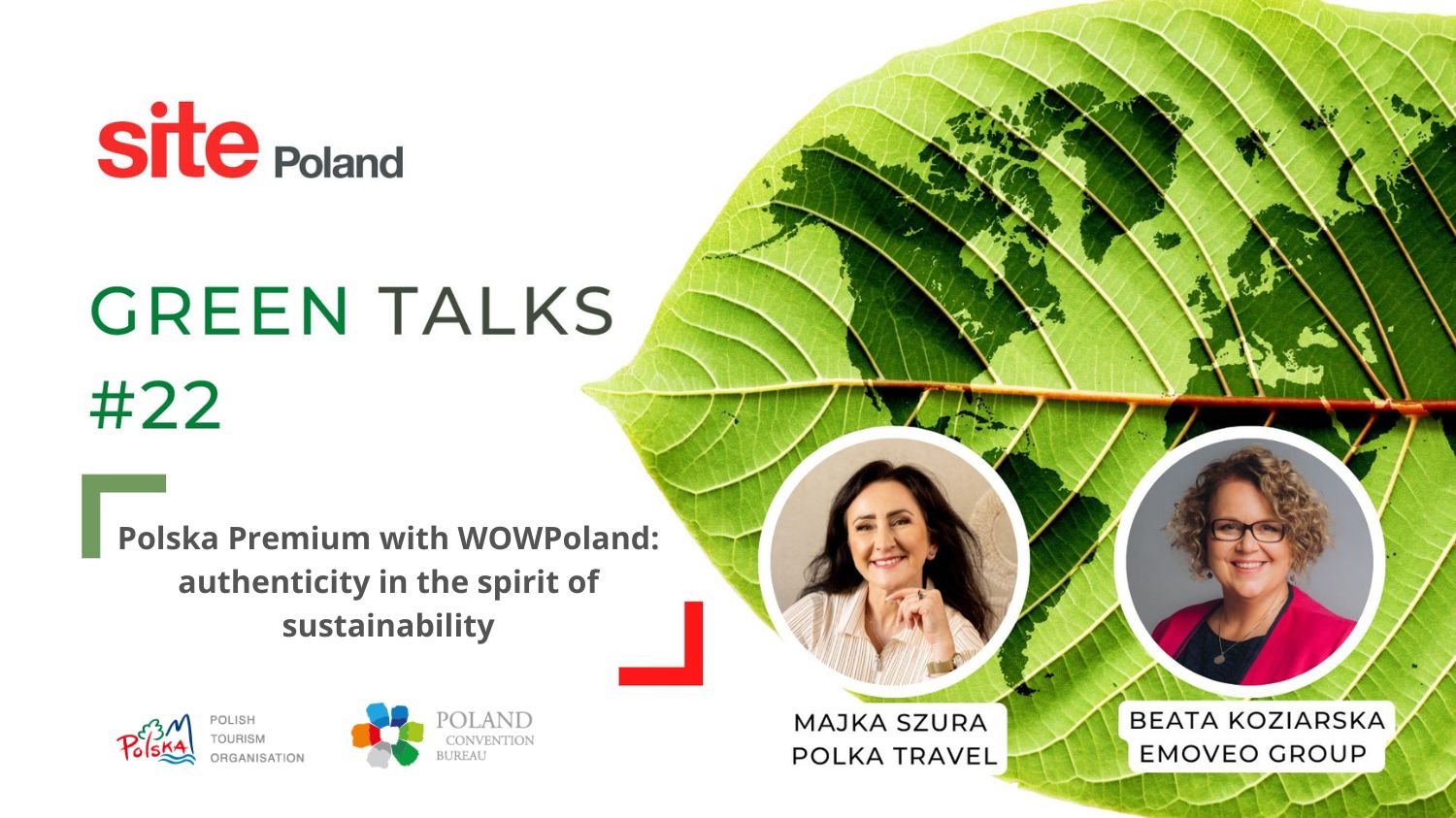
Beata Koziarska – Member of the Audit Committee of SITE Poland (2026–2027), Expert of the Destination Poland Green Academy workshops.
BIO: Majka Szura
- Travel designer and founder of the Polka Travel brand (2007). A Spanish philologist and sworn translator, she completed postgraduate studies in Public Relations at the University of Economics in Poznań. Co-creator of WOWland (2020).
- With over three decades of experience in tourism, and for the past 15 years specialising in Incentive Travel projects for leading Polish companies and global corporations, she manages groups ranging from several dozen to several hundred participants.
- She has visited more than 137 countries and personally tests every bespoke project, ensuring nothing is left to chance. Her signature strengths include creative travel concepts, precise logistics, storytelling and sensitivity to global trends. She believes travel is a strategic tool for building organisational culture and loyalty, reflected in her motto #TasteTheLife.
- Since 1998, she has been a regular guest on the radio programme Musical Journeys Around the World, and since 2022 also on What’s in Fashion, discussing global cultural and lifestyle trends. She frequently speaks at tourism and lifestyle industry events.
- Recipient of numerous accolades: Businesswoman of the Year 2015, Entrepreneurial Woman of the Year 2016, nominee for the European award The Dreamcatchers / Influencers of New Europe’s Meetings Industry (2023). In 2025, Polka Travel received the prestigious Gazele Biznesu distinction.
- A passionate portrait photographer, she documents the people she encounters during her travels, creating personal narratives captured through the lens.
Destination Poland Green Academy
Destination Poland Green Academy is a nationwide educational programme delivered by the SITE Poland in cooperation with the Polish Tourism Organisation – Poland Convention Bureau. The project aims to strengthen the MICE industry’s competencies in ESG and the delivery of sustainable events