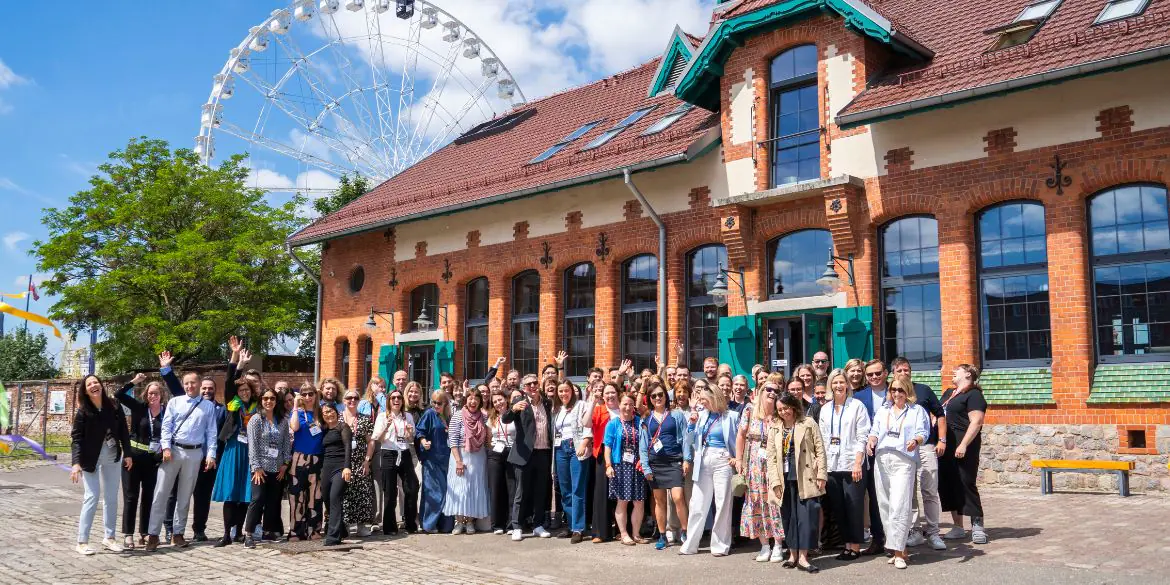
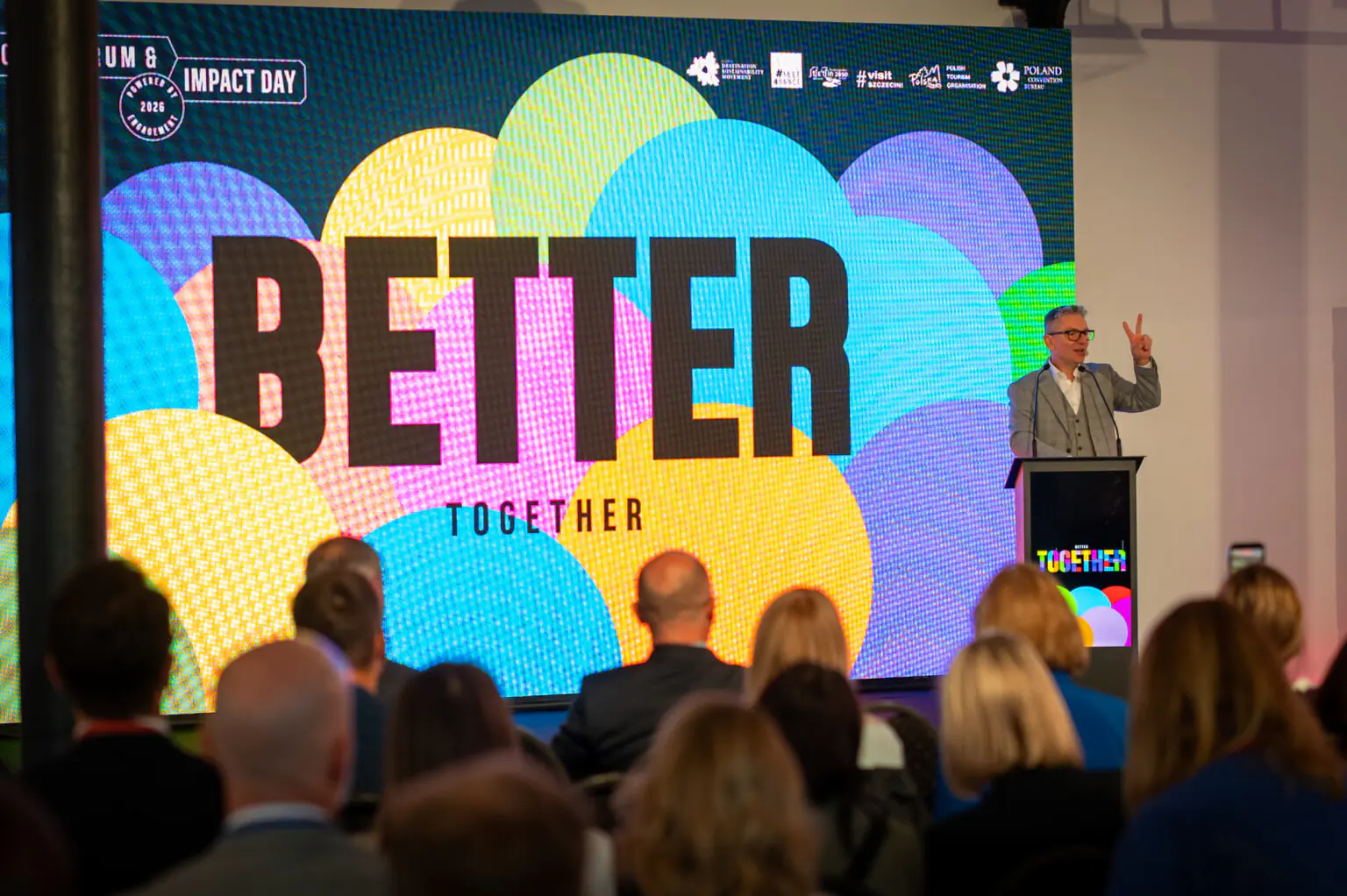
From 16 to 18 June 2026, Szczecin became one of the key global stages for debate on the future of the meetings industry and sustainable destination development. This year’s edition of GDS-Forum & Impact Day, organised by GDS-Movement and #MEET4IMPACT, took place in the capital of West Pomerania. The Polish Tourism Organisation – Poland Convention Bureau was one of the key partners of the event. The official gala was opened by Magdalena Krucz, President of the Polish Tourism Organisation.
Three days of intensive workshops, international knowledge exchange, co-creation sessions and networking demonstrated that the responsible transformation of the MICE sector is no longer only a subject for discussion. It is a process increasingly translating into concrete tools, strategies and measurable social and environmental impact.
Szczecin as a global stage for sustainable development in the MICE industry
GDS-Forum & Impact Day 2026 was one of the most important international events dedicated to sustainable tourism, regenerative destinations and the responsible development of the meetings industry. The choice of Szczecin as host city carried both symbolic and practical significance. A city long associated with shipbuilding, its port and its Oder River heritage, Szczecin is now increasingly demonstrating its transformation into a modern, green and open metropolis.
The event aligned with Szczecin’s vision as a “Floating Garden” – a garden city on water, where urban planning, nature, culture and social life form a coherent story of change. For forum participants, the city became not only the host, but also a real-life case study showing how post-industrial heritage can be used to build a new quality in business tourism.
A living lab instead of a traditional conference
For years, GDS-Forum has stood out thanks to a format far removed from the conventional conference model. The organisers move away from one-way presentations and rigid panel discussions in favour of workshop-based work, small-group conversations, knowledge exchange and the joint design of solutions.
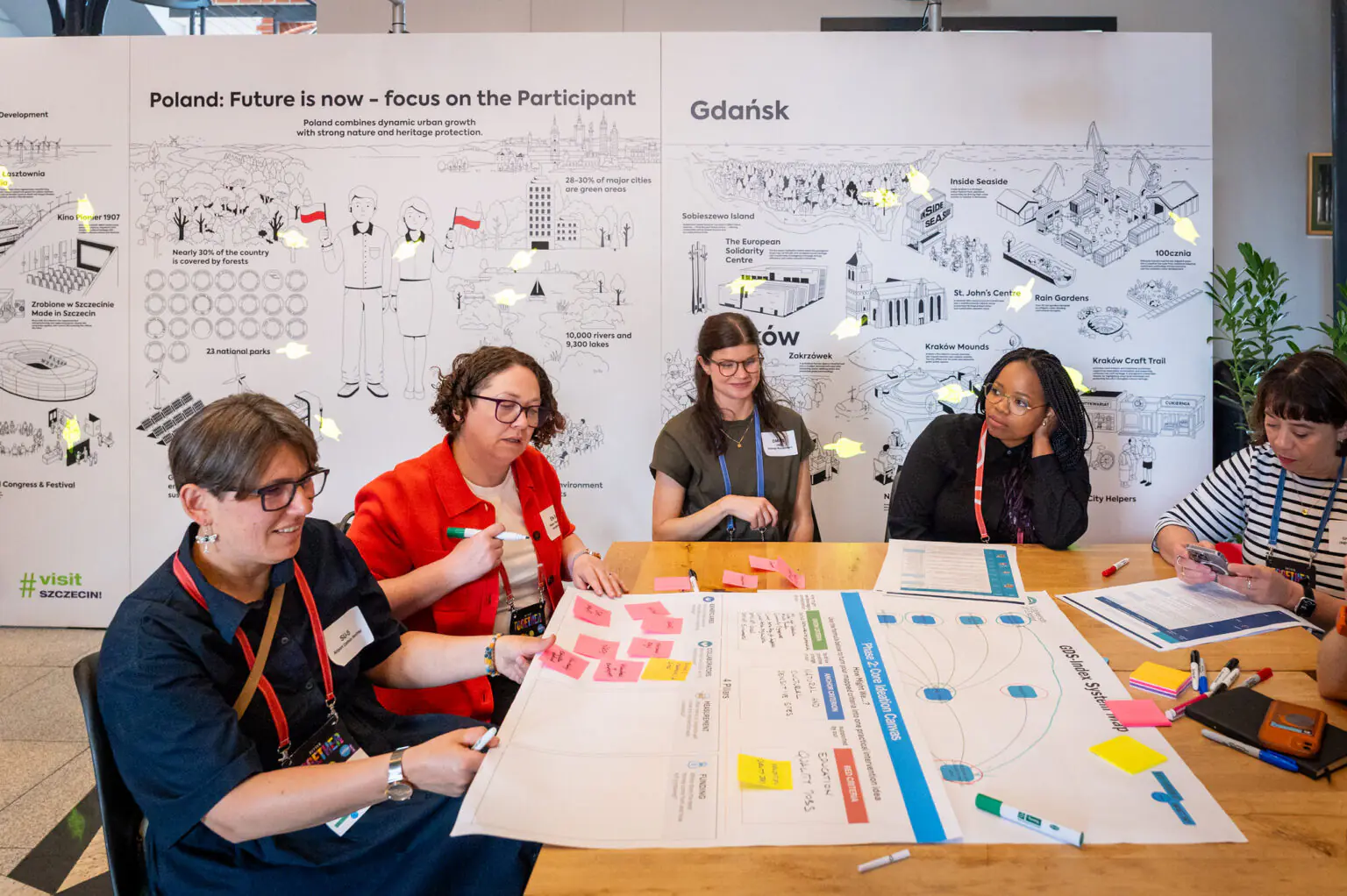
In Szczecin, this idea of a “living lab” was particularly visible. Participants were not merely recipients of the programme. They became its co-creators – sharing knowledge, testing ideas, analysing challenges and seeking practical answers to the question of how events can generate long-term value for cities, residents, delegates and organisers.
The programme strongly highlighted topics such as:
- reducing the carbon footprint of events,
- designing events with positive social impact,
- regenerative tourism and responsible destination management,
- inclusivity, accessibility and delegate wellbeing,
- digital transformation in the meetings sector,
- cooperation between cities, organisers, associations and local communities.
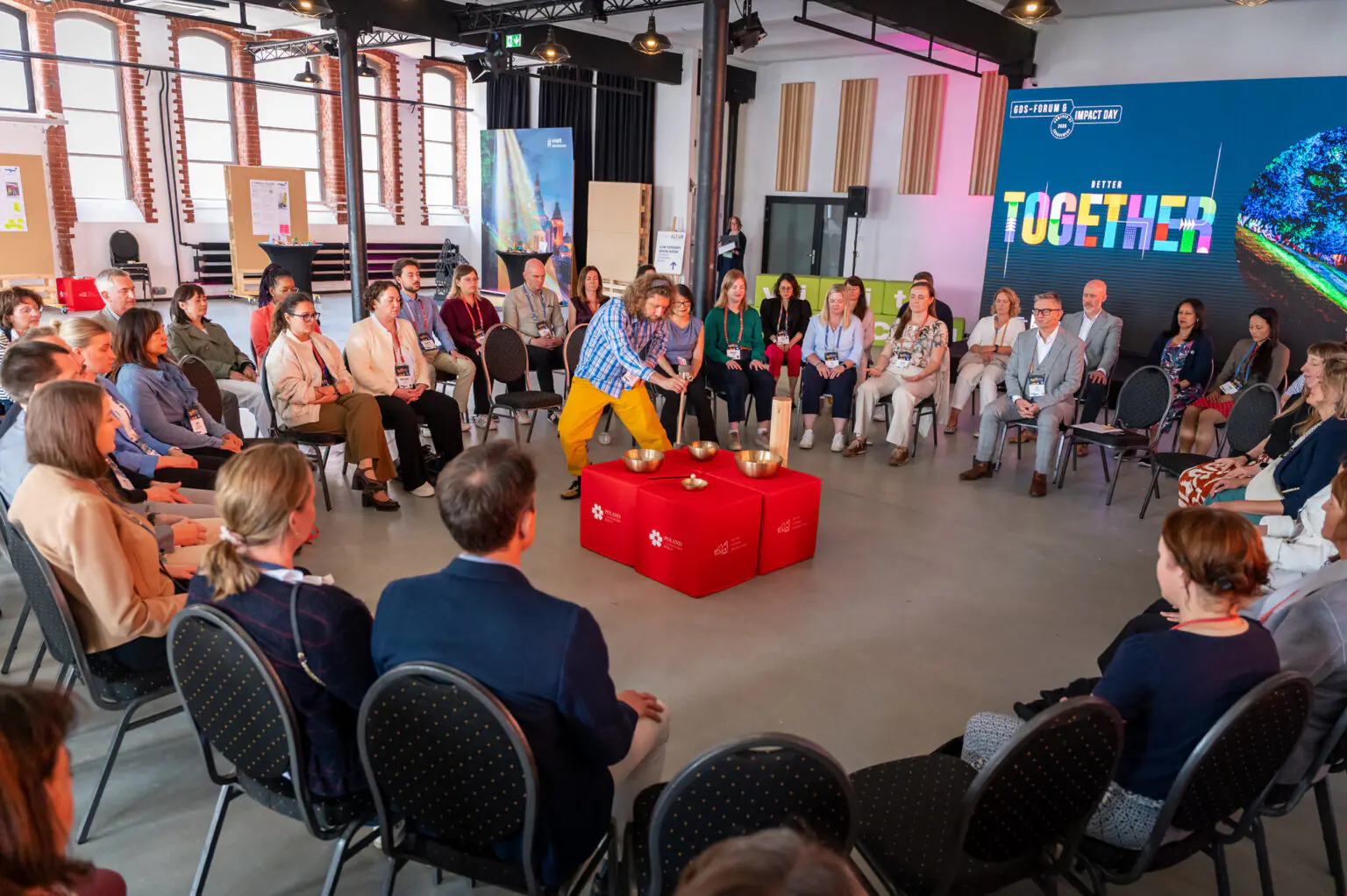
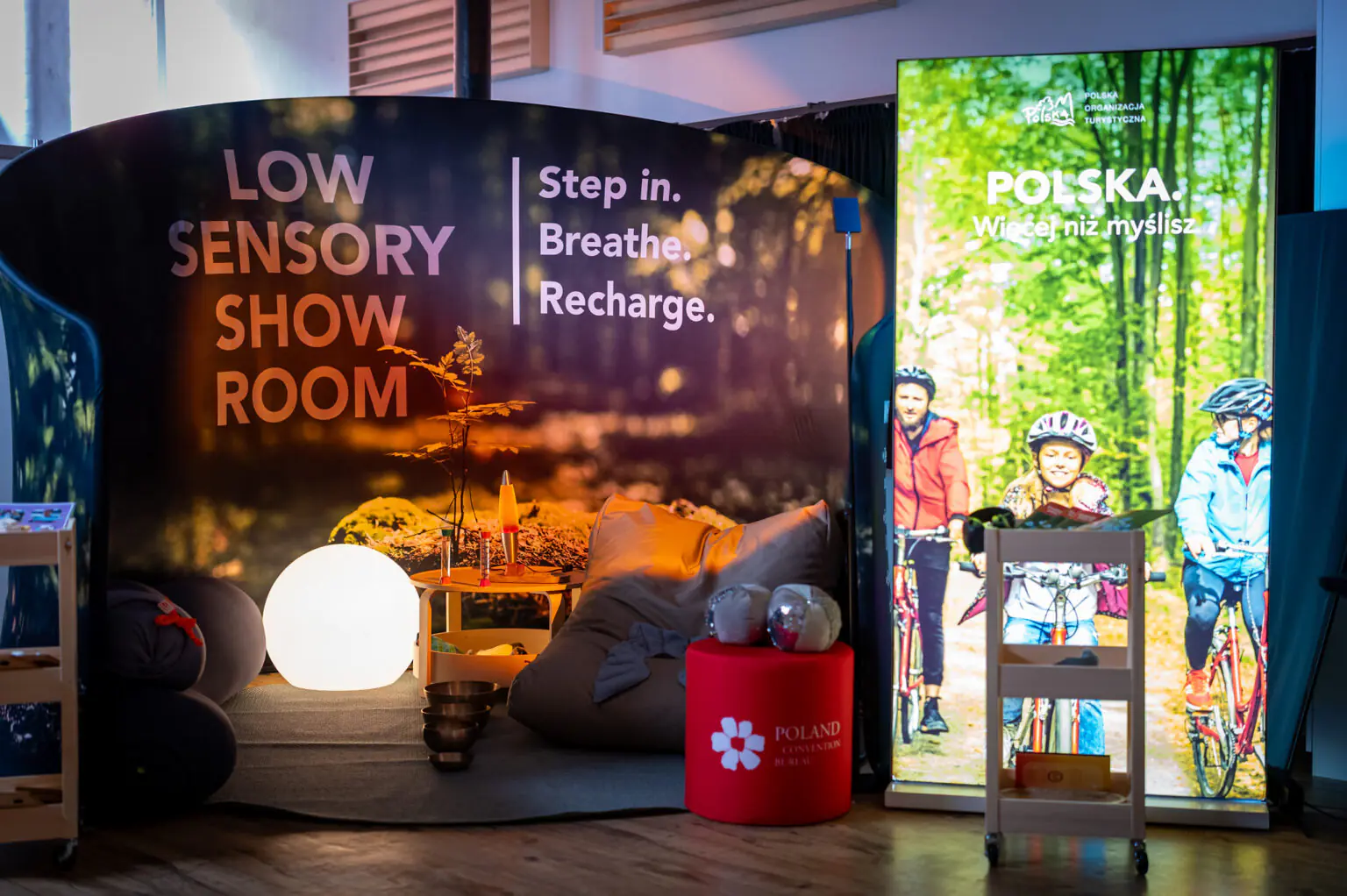
As part of the event, the Polish Tourism Organisation provided relaxation workshops and an LSSR – Low Sensory Show Room zone.
Cielętnik and Stara Rzeźnia: spaces of transformation
One of the most important elements of the Szczecin edition of GDS-Forum & Impact Day was the choice of venues. The event took place, among others, at Cielętnik and the Euroregionalne Centrum Kultury Stara Rzeźnia on Łasztownia. These are places that strongly reflect both the history and contemporary transformation of the city.
The post-industrial and historic spaces were not merely a backdrop for the programme. They became part of it. They showed that cities can use their heritage in a new way – not by cutting themselves off from the past, but by creatively reinterpreting it. In the context of the MICE industry, this was particularly significant, as more and more event organisers are looking for authentic, locally rooted venues capable of telling a broader destination story.
Szczecin showed that an event space can strengthen the message of an event. In this case, that message was transformation – environmental, social, urban and business-related.
A Polish voice on inclusivity and the future of events
A strong Polish substantive contribution was clearly visible in the programme – the event functioned as a living lab, where solutions were co-created in real time. The session “The Future is Now”, prepared by the Poland Convention Bureau of the Polish Tourism Organisation in cooperation with convention bureaux from Gdańsk, Kraków, Wrocław and Szczecin, was dedicated to cooperation between cities and the responsible development of destinations.
The Poland Convention Bureau session also referred to the assumptions of the MICE Sub-strategy for 2026–2030, which places the participant at the centre of attention.
Gallery from the Future is Now session – here.
Practical case studies were presented by Gdańsk – Gdańsk Convention Bureau, Kraków – Kraków Convention Bureau, Wrocław – Convention Bureau – Wrocław, and Szczecin Convention Bureau, showing how green strategies can be translated into concrete actions.
The discussion showed that sustainable development in the meetings industry is not limited solely to ecology, emission reduction or waste management. Increasingly important are also:
- neuro-inclusivity and designing events that are friendly to neurodiverse participants,
- architectural, digital and communication accessibility,
- delegate wellbeing,
- involving different social groups in the design of experiences,
- creating events that leave real value for the place and its community.
This approach fits well into a broader shift in the MICE industry. Organisers are increasingly asking not only how many people will attend an event, but also what social, environmental and economic footprint will remain after it ends.
Impact Day: from conversation to concrete solutions
The final day of the event, Impact Day, was dedicated to the practical design of impact. Participants worked on solutions that can support cities, associations, organisers and local communities in creating events that deliver lasting benefits.
At the centre of the discussion was the question: how can events become a tool for real change? Answers were sought in areas such as financing green projects, new technologies, social participation, intergenerational cooperation and measuring the outcomes of activities.
Impact Day showed that the future of the meetings industry will belong to those destinations and organisers that can combine an attractive programme with responsibility, measurability and authentic engagement with the local environment.
The significance of GDS-Forum & Impact Day for Poland
The organisation of GDS-Forum & Impact Day 2026 in Szczecin was an important moment for the Polish meetings industry. For the first time, an event of this scale dedicated to sustainable destination development took place in Poland.
For the MICE sector, this brings several important benefits:
- strengthening Poland’s position in the international dialogue on sustainable events,
- promoting Polish cities as responsible destinations ready for transformation,
- showcasing the good practices of Kraków, Gdańsk, Wrocław and Szczecin within GDS-Movement,
increasing Szczecin’s recognition as a meetings destination, - building relationships with international industry leaders, associations and experts.
GDS-Forum & Impact Day 2026 showed that Poland is no longer only a recipient of global sustainability trends. Increasingly, it is becoming an active participant and co-creator of them.
Summary: events that truly matter
GDS-Forum & Impact Day 2026 in Szczecin was much more than another international conference. It was an example of an event that itself became a tool for change – a place for testing ideas, building relationships, designing solutions and strengthening responsible leadership in the meetings industry.
Szczecin made the most of this opportunity, presenting its transformation, MICE potential and ambition to develop as an open, green city conscious of its impact. For Poland, it was also an important opportunity to show the international industry that sustainable development, accessibility and positive social impact are becoming an integral part of the country’s meetings and events offer.
GDS-Forum & Impact Day 2026 left behind not only valuable contacts and inspiration. It also left a strong message: the future of the MICE industry will belong to those destinations that can combine the attractiveness of a place with responsibility for people, the environment and long-term development.